|
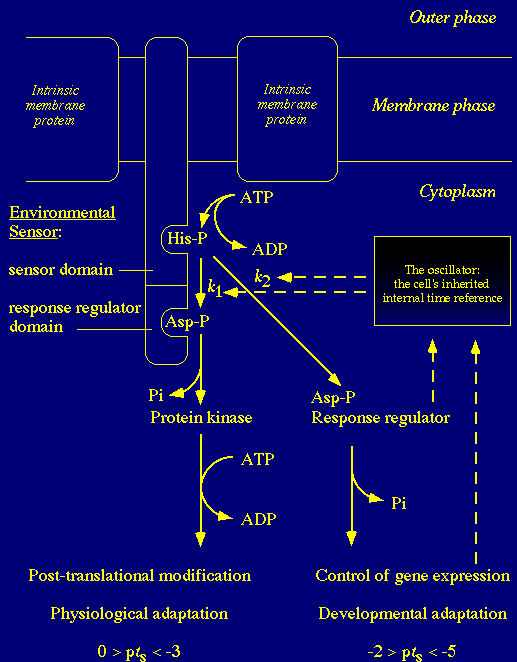
A proposal for control of post-translational covalent modification by phosphorylation and, in parallel, of gene expression: bifurcated signal transduction, and arbitration between pathways. If the putative environmental sensor contains both sensor and response regulator domains, and if the kinetically favoured pathway for phosphoryl transfer (k1) is intramolecular, then phosphorylation of the sensor's own aspartate would initiate a physiological response, for example by activation of a protein kinase. Phosphoryl transfer (k2) may also occur to the aspartate of the response regulator that regulates gene expression. It is proposed that biological clocks provide an input that arbitrates beween physiological and developmental responses. The input could achieve this effect by acting on the sensor and response regulators in such a way as to alter the ratio k1:k2. When a physiological response is more appropriate than a developmental one, the signal from the clock specifies a structure and recognition of the response regulator in which k1 > k2. When a developmental response is more appropriate than a physiological one, the signal from the clock specifies a structure and recognition of the response regulator in which that k1 < k2. |